
I have thought about it for a long time. Speaking or writing? Has everything not already been said, looked at from every angle, scientifically, with poetry, politically, psychologically? Is there anything left to add?
But if you are truly a writer, you essentially have no choice. You must.
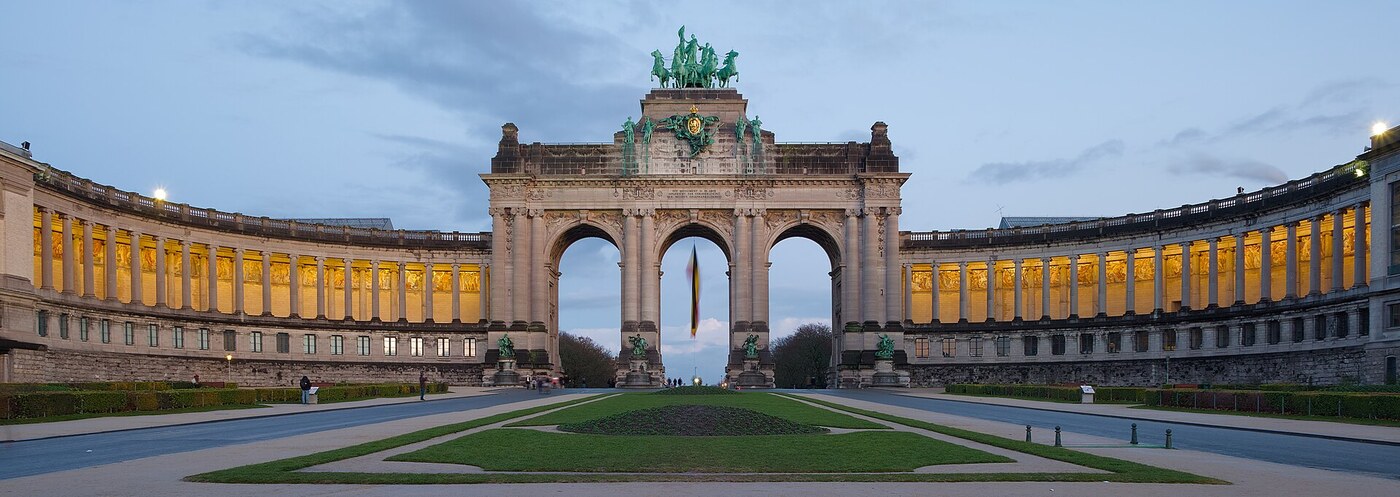
First of all: Brussels. I love Brussels, I like going there, to museums, to shop, to stroll, to enjoy good food. I always take our foreign guests to Brussels and show them our capital with some pride. Brussels is great. Our only big city. Multicultural. Multinational. Our own Paris.
I love Brussels, I love Schaerbeek, where my son lived for a long time and where life is good. I have never been to Molenbeek; everything I know about it comes from newspapers and TV and is therefore secondhand. I have no Muslims in my circle of friends. When I want to learn more about them, I read their books. Especially the books of writers who grew up here, in Borgerhout, in Brussels, in Amsterdam. I recognize in them, apart from culture and religion, myself, the same desires, the same fears. I read the Quran and learned that the difference from the Bible is not so great. The same grandeur, the same cruelty, divine words in an inadequate human language. I did that before I started on 'Hardnekkige Mist'.
Let me say a little more about that book, in which two young Moroccans go off the rails.
I wonder what 'Ali' and Zidan would think of March 22, 2016. Of Zidan I am certain: he would find it appalling. What he actually wants is clear: a life like everyone else, a partner, children, a job, even though he presents himself differently. He makes a wrong choice when he considers his culture (the honor debt) more important than his conscience. The teacher reminds him who he really is: a decent person.
With 'Ali' I hesitate. He is a wounded person, he has lost himself. He suffers from humiliation and rejection, and hopes for redemption. The redeemers are ready: a small group of fanatics. How far that group would go, I do not know. Not every extremist becomes violent. But a young man like 'Ali' would offer little resistance if he were swept along. In the past, as a Belgian, he might have joined the communist terror group CCC; in the Basque Country the nationalist ETA; in Germany the leftist 'Rote Armee'; in Italy the rightist P2 that blew up the station in Bologna; today it could be the religious IS. From small crimes to big ones, and from big crimes finally to terrorism. 'Ali' ends up in prison on a charge of murder, wrongly. How will he get out?
The debate is interesting and at the same time futile: are you born a terrorist, or does your (lack of) upbringing make you one? I tend to believe the latter. Within each of us lies good and evil, generosity just as much as envy. Which little plant do we nurture, and which do we weed out? When is the garden finally overgrown by evil?