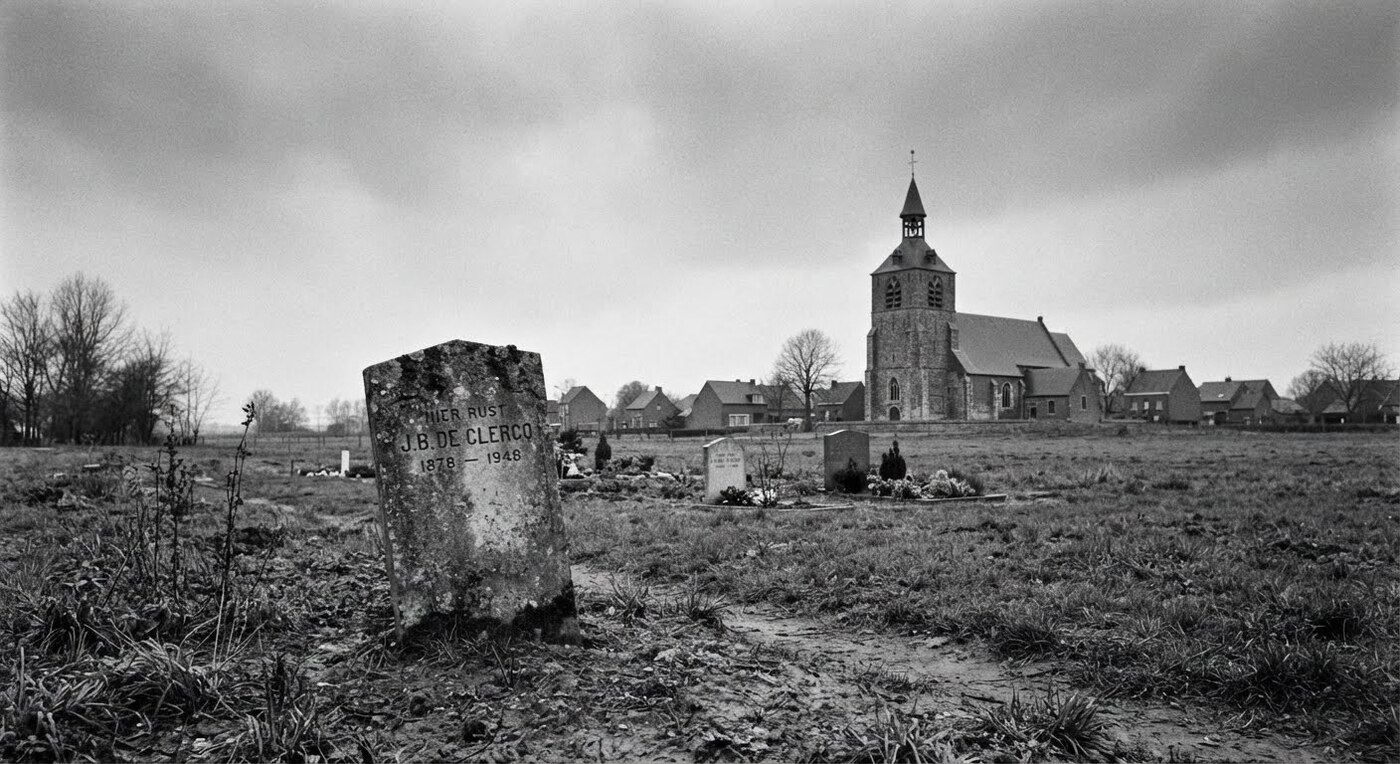
Yesterday my wife and I visited our parents' grave. That meant a drive with a suitcase full of oversized chrysanthemums to Temse, from Temse to Putte in the Netherlands, and back home again. The hundred-mile trip.
But it was much more than that. Although memories of the past inevitably fade, we both felt a strong sense of connection to the years of our youth. Do you remember ... what they used to say ... what our parents did. How different times were back then, how different we ourselves were. It was a kind of return in time, and standing in a churchyard with the full awareness that it was a finished past tense.
The graves on the left and right were in decay. Broken bluestone, creeping weeds, taken by the climate and moss. The old part of the cemetery, both in Temse and in Putte, is slowly sinking into oblivion. Once the children have also passed away, and the grandchildren have grown old, those old graves are no longer visited much. The grave of an uncle had already been cleared, there is no trace left of Uncle Frans.
An old cemetery on a misty morning, tilted headstones, forgotten souls, dripping trees, nothing is more Halloween than that.
And when we later drove through the village, we also saw there that the past no longer existed and had been replaced by the new, the modern, which is sleek and efficient. The town hall where we got married has disappeared, a municipal merger, isn't it, just like the little shop on the corner.
Mind you, not that everything was better in the past, I think rather the opposite. We live richer than ever in history, safer, healthier and more besides. The great fear of our time is not the loss of the past, but whether our children and grandchildren will later also be able to say that it was better than ever.